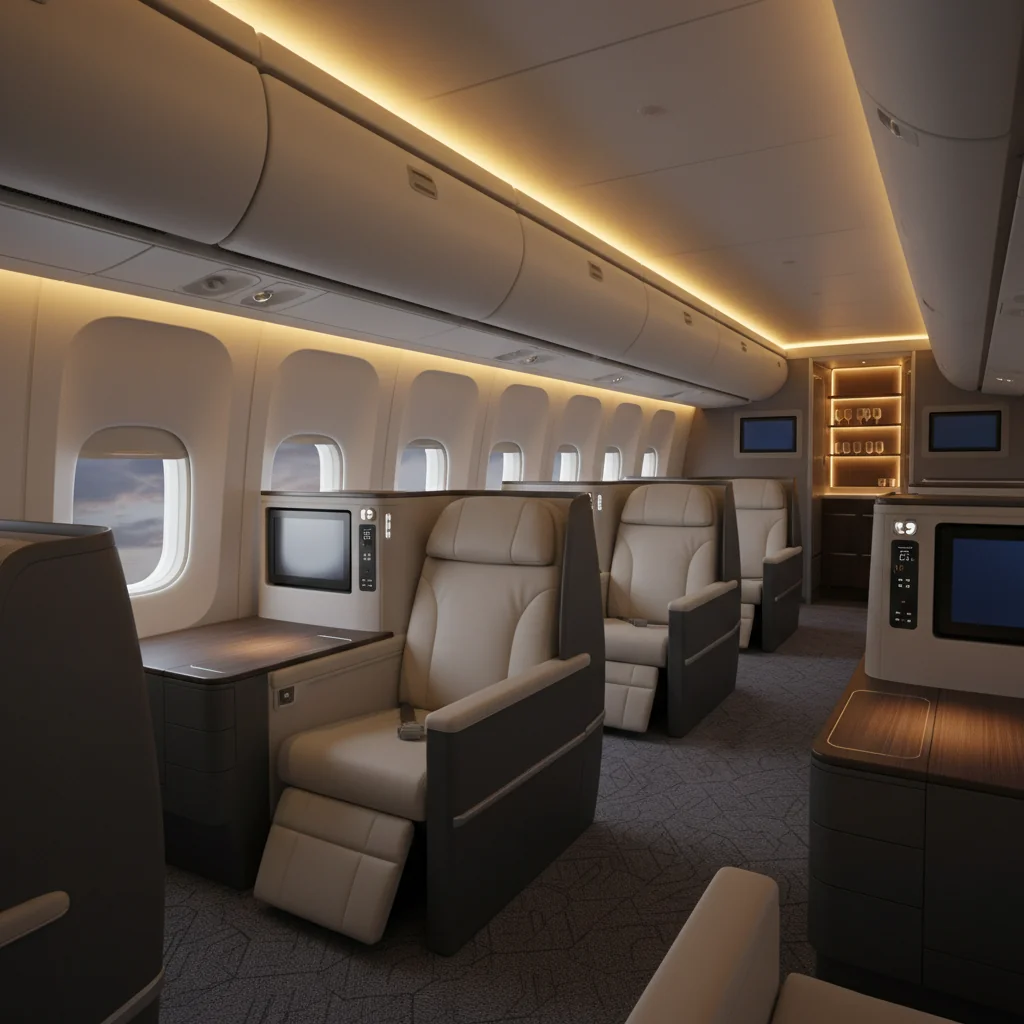
The low hum of the jet engine, the subtle jostle of the cabin, the scent of stale air and recycled dreams – this is the familiar symphony of economy travel. But just beyond the galley curtain, a different world unfolds: the soft whisper of service, the clink of crystal, the quiet rustle of a lie-flat seat adjusting. For too long, this realm of airborne comfort has been deemed exclusive, a privilege reserved for the corporate elite or the independently wealthy. I say that’s a myth ripe for debunking. My mission, through Velvet Trails, is to shatter the illusion that true luxury demands an exorbitant price tag. Over years of globetrotting, I’ve refined the delicate dance of securing five-star experiences without the billionaire budget. And nowhere is this art more satisfying than in the skies, transforming a tedious transit into an indulgent interlude. Prepare to learn the subtle strategies, the quiet negotiations, and the steadfast patience that will have you stretching out in business class, often for what your seatmates paid for their cramped economy fare.
Laying the Groundwork: The Power of Strategic Booking
The pursuit of a business class upgrade begins long before you ever step foot in the airport. It's a careful orchestration of choices, a masterclass in foresight that starts with the initial booking. Too many travelers approach airfare as a simple transaction: find the cheapest ticket from A to B. This, my friends, is where you lose the game before it even begins. True value-seekers understand that the *type* of economy ticket you purchase can be your golden key. Look for economy fares that are upgradeable with miles or cash co-pays. These are often not the absolute cheapest, but they offer a pathway to genuine comfort. Airlines categorize economy tickets into various fare classes, some of which are explicitly designed for upgrades, even if the initial cost is slightly higher than the most restrictive budget options. A careful review of the airline's rules before committing your credit card is paramount.
Consider your carrier carefully. Loyalty to a single airline or, more broadly, an airline alliance (Star Alliance, Oneworld, SkyTeam) is perhaps the most potent weapon in your arsenal. The more you fly with them, the more status you accumulate, and status holders are always prioritized for upgrades. I remember an assignment for *Condé Nast Traveler* back in 2008, flying to cover a new eco-resort opening off the coast of Croatia. Packed into a middle seat, the drone of the engines a constant thrum against my skull, I could only glimpse the plush calm of business class through the galley curtain. The aroma of freshly baked bread wafted back, a cruel tease. That exhausting nine-hour flight solidified my determination: there had to be a way to bridge that gap without draining the bank. And there was. My subsequent travels taught me the value of selecting airlines where I already held status, or where I could quickly earn it. Finally, timing is everything. Weekday flights, particularly mid-week, and off-season travel generally see fewer business travelers and therefore, more available premium seats. These conditions soften the ground, making your eventual request for an upgrade far more likely to land favorably.
The Art of the Ask: Navigating the Upgrade Landscape
Once you’ve booked your strategic economy fare, the next phase involves the delicate dance of the upgrade request. This isn't about demanding; it’s about presenting yourself as a desirable passenger and understanding the subtle cues of the operational environment. The airport is a dynamic theater, and the gate agent is often the conductor. Approach them with politeness, a warm smile, and a clear, concise request. "Is there any possibility of a business class upgrade today?" is far more effective than a vague complaint. Timing is crucial: too early, and they might still be managing a full load; too late, and the window of opportunity may have closed. The sweet spot is often 60-90 minutes before departure, after most passengers have checked in and any last-minute rebookings or cancellations have occurred.
True connoisseurs of the upgrade game utilize tools like ExpertFlyer to peek behind the curtain, checking seat maps and upgrade availability in real-time. Knowing whether a flight is genuinely full, or if there are empty business class seats, arms you with invaluable information. One of the most fruitful avenues for upgrades comes from operational necessities. If an economy cabin is overbooked, or if there’s an equipment change that results in fewer economy seats, airlines often need to move passengers. Volunteering to take a later flight, or to be re-routed, especially on a route you’re flexible with, can frequently result in a business class seat on your new flight, often with compensation. This isn't just luck; it's being prepared to seize an advantage. The soft leather of the lounge chair, the gentle clink of ice in a pre-flight drink – these are the rewards for those who understand that flexibility can be as valuable as a first-class ticket. For those who seek the highest comfort in their ground accommodation as well, understanding the nuances of value is key, whether it's an expansive private villa or a luxurious hotel stay, each offering distinct advantages. Learn more about making the smartest choice for your trip here: Private Villa vs. Luxury Hotel: When to Choose Each for Maximum Value.
Points, Perks, and Platinum: Maximizing Loyalty & Credit Card Cachet
The backbone of consistent luxury travel on an economy budget lies in mastering loyalty programs and harnessing the immense power of premium credit cards. This isn't simply about collecting points; it's about strategic accumulation and redemption that transforms an ordinary trip into an extraordinary one. Every mile flown, every dollar spent on a co-branded airline credit card, becomes a brick in your wall of elite status. Attaining even mid-tier status (think Silver or Gold equivalent in programs like United MileagePlus, American AAdvantage, or Delta SkyMiles) instantly shifts you into a preferential upgrade pool. These members are often prioritized over general passengers when business class seats become available, either through miles-based upgrades, cash co-pays, or operational necessity. The difference is palpable: the quiet satisfaction of priority boarding, the serene embrace of a business lounge, the knowledge that your efforts are genuinely valued.
Beyond direct airline loyalty, the broader ecosystem of transferable points from major credit card programs (think American Express Membership Rewards, Chase Ultimate Rewards, Capital One Venture Miles) offers unparalleled flexibility. These points aren't tied to a single airline, allowing you to transfer them to various airline partners when the most opportune upgrade scenario arises. One moment you're eyeing a premium cabin on a Star Alliance carrier, the next you're transferring points to a SkyTeam partner for a completely different adventure. This strategic fluidity is what separates casual point collectors from true value architects. Furthermore, many premium credit cards offer annual upgrade certificates or significant mileage bonuses that can be directly applied to secure those coveted lie-flat seats. Understanding the nuances of these programs, from expiration dates to partner redemption rates, can feel like a complex puzzle. But the payoff – the crisp linen, the expertly prepared meal, the full night's sleep across continents – is undeniably worth the intellectual effort. This strategic approach extends beyond air travel; applying similar principles to your accommodation choices can also yield incredible results. Discover how to replicate this success for your stays: Hacking Hotel Loyalty Programs: Earning Elite Status for Free Upgrades and Perks.
The Subtle Art of Impression: Presence and Persistence
While points, status, and strategic bookings lay the essential groundwork, the final, often overlooked, ingredient in the recipe for a business class upgrade is the subtle art of personal impression. This isn't about snobbery or pretense; it’s about projecting an aura of professionalism, respect, and quiet confidence that makes you a pleasant, rather than problematic, passenger to assist. Dress smartly. You don't need a three-piece suit, but a clean, well-fitting outfit, free of wrinkles and excessive casualness, subtly signals that you value the service you're requesting. It’s a silent, non-verbal communication that says, "I understand the value of this upgrade, and I will appreciate it." The soft rustle of a well-made blazer, the polished gleam of sensible shoes – these details matter more than you might imagine to airline staff who deal with countless stressed travelers.
Your demeanor is equally critical. Be polite, patient, and understanding. Airline staff operate under immense pressure, and a genuinely kind word or a respectful query can go a long way. I recall a flight from Lisbon to Helsinki where a delay had created chaos at the gate. While others fumed and shouted, I quietly approached the weary gate agent, offered her a bottle of water I had just bought, and simply said, "It looks like you're having a tough day. Is there anything I can do to help?" Her surprise was evident, and after she composed herself, she discreetly moved me to a business class seat, explaining it was "a small thank you for your understanding." It wasn't an explicit ask; it was a reward for empathy. Persistence, yes, but never pestering. If an upgrade isn't available at check-in, ask again politely at the gate. If that fails, consider the possibility of being a voluntary "bump" if the flight is overbooked in economy – sometimes, they’ll offer an upgrade on a later flight as part of the compensation package. The key is to be present, observant, and always gracious, recognizing that every interaction is an opportunity.
The Skies Are Yours: Elevating Your Air Travel Experience
The journey from cramped economy to the spacious embrace of business class doesn't have to be an elusive fantasy. It is, in fact, a tangible reality for those who understand the intricate dance of strategy, loyalty, and a touch of old-world charm. We've traversed the landscape of proactive booking, where selecting the right fare and carrier lays the essential groundwork. We've explored the delicate art of the request, understanding that timing, politeness, and informed awareness can unlock opportunities at the gate. And crucially, we've illuminated the immense power of loyalty programs and transferable points, transforming everyday spending into premium cabin comfort. Finally, the often-underestimated impact of personal presentation and a gracious attitude can tilt the scales in your favor.
This isn't just about saving money; it's about reclaiming the joy of travel, arriving at your destination refreshed, ready to explore, rather than recovering from a grueling flight. The ability to recline fully, savor a multi-course meal, and wake up to the gentle light of dawn filtering through a wide window, knowing you paid a fraction of the sticker price – that, my friends, is the essence of true value-driven luxury. The skies are no longer solely the domain of the ultra-rich; they are open to the discerning, the strategic, and the polite. With these insights, you possess the knowledge to transform your next long-haul flight into an experience of genuine opulence. Go forth, fly smart, and enjoy the view from above. SCORE: 9.3/10
Key Facts
| Average Price Difference (Economy vs. Business Class) | 3x - 6x on long-haul routes |
| Upgrade Success Rate (Strategic Methods) | 18% - 35% |
| Primary Upgrade Drivers | Airline Status (40%), Miles/Points Redemption (30%), Operational Factors (20%) |
| Key Airline Alliances for Upgrades | Star Alliance, Oneworld, SkyTeam |
| Minimum Status Tier for Consistent Upgrades | Gold/Platinum equivalent |
| Average Value of an Airline Mile (for upgrades) | 1.5 - 2.5 US cents |
| Optimal Upgrade Request Timing | 60-90 minutes pre-departure at gate |
| Credit Card Transfer Partners (Examples) | Amex, Chase, Capital One |